The movie trailer always goes the same way. A character swallows a pill, the screen flickers, and a calm voice explains that most of us only use 10 percent of our brains. Imagine what the other 90 would do.
It is a great setup for a movie. It is also wrong. So where did the number come from, and why did it stick for the better part of a century?
The verdict
Verdict: myth. There is no part of the healthy brain that sits idle, and no study ever measured “10 percent.” The figure appears to have grown by retelling, not by measurement. The brain also costs far too much to run to be 90 percent spare.
Where the 10 percent came from
The trail is tangled, and the honest answer is that nobody can point to one inventor. Here is what can be checked.
The psychologist William James, writing around the turn of the 20th century, argued that the average person reaches only a small part of his or her potential. He never gave a percentage, and he was talking about potential, not brain tissue (Scientific American, 2004). Later self-help writers turned “10 percent of our capacity” into “10 percent of our brain.”
The biggest boost came in 1936. In his preface to Dale Carnegie’s How to Win Friends and Influence People, the broadcaster Lowell Thomas wrote that “Professor William James of Harvard used to say that the average man develops only ten percent of his latent mental ability” (as quoted by Wikipedia). I could not read the original page myself, so treat the exact wording as secondhand. Even if it is accurate, notice what it says: “mental ability,” not “brain.”
Other threads may have helped. Early neuroscientists talked about “silent” areas of the cortex, meaning areas whose job they had not yet figured out. That was likely misheard as “areas with no job” (Scientific American, 2004). The idea has also been pinned on Albert Einstein, but the Einstein Archives found no record of him saying it (Scientific American, 2004).
What the evidence shows
Start with injuries. If 90 percent of the brain were spare, damage would usually go unnoticed. It does not. Damage to almost any area, from a stroke or a blow to the head, produces some loss of function (Scientific American, 2004).
Next, look at brain scans. EEG, MEG, PET and fMRI have linked many mental tasks to specific regions. In the words of psychologist Barry Beyerstein, “no quiet areas awaiting new assignments have emerged” (Scientific American, 2004). Stimulating points on the brain during surgery has not turned up dormant zones that give no response either (Scientific American, 2004).
No quiet areas awaiting new assignments have emerged.
Barry L. Beyerstein, Simon Fraser University (Scientific American, 2004)
The energy bill
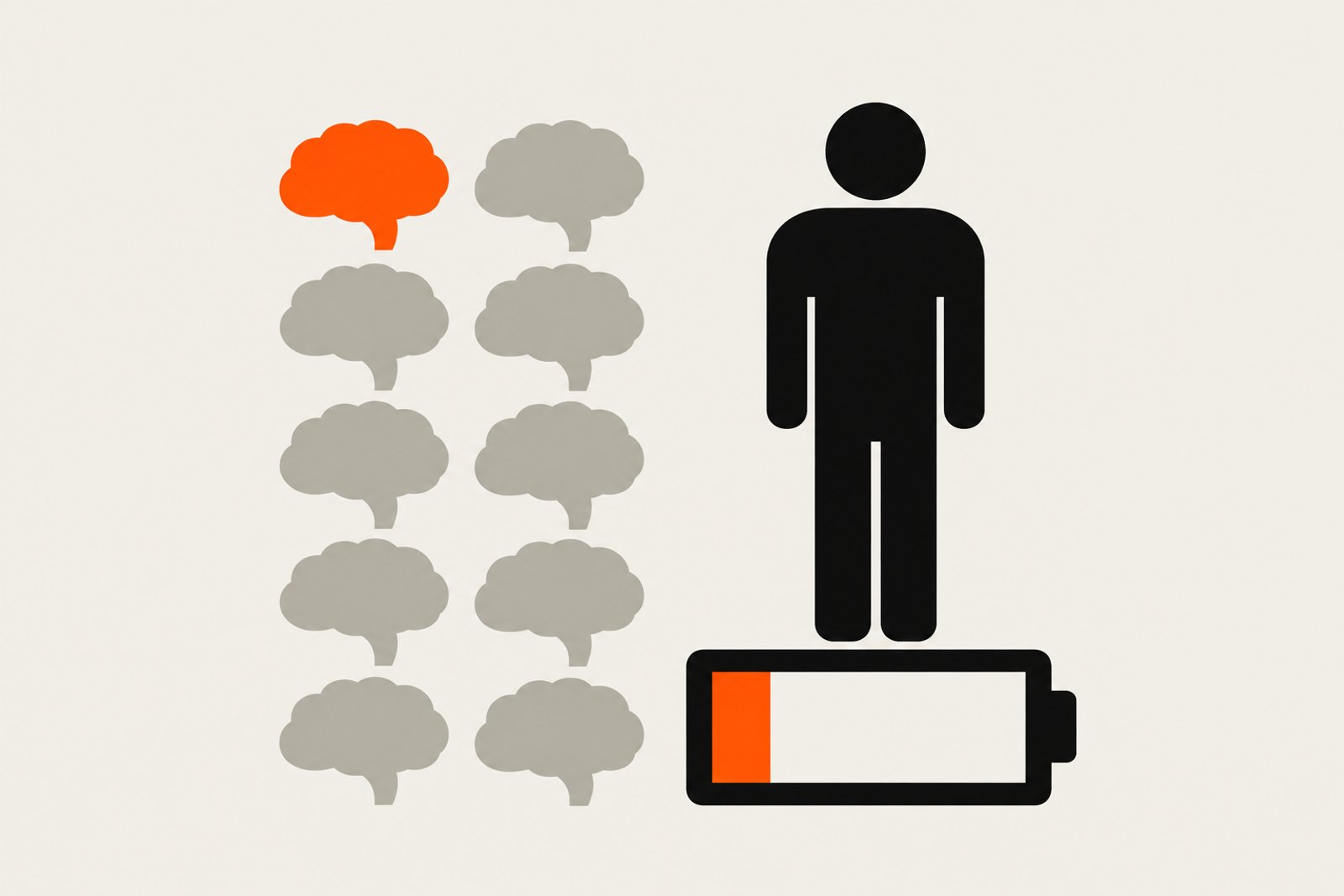
Here is the argument that is easiest to feel. Your brain is about 2 percent of your body weight, yet it uses roughly 20 percent of your body’s energy (BioNumbers, citing Roth and Dicke, 2005). The Smithsonian’s human origins program gives a range of 20 to 25 percent (Smithsonian, n.d.).
Think of a house where one small room draws a fifth of the electric bill. You would not assume it was empty. Beyerstein makes the same point from evolution: brain tissue is expensive to grow and to run, and natural selection would not keep paying for a mostly unused organ (Scientific American, 2004).
| Claim | What the evidence says |
|---|---|
| 90% of the brain is idle | Imaging and surgery find no dormant regions |
| Damage to most areas goes unnoticed | Damage almost anywhere causes some deficit |
| The brain is a spare tire | About 2% of weight, about 20% of energy |
The part that complicates the debunk
“We use all of our brain” does not mean “all of it fires at once.” At any moment, only some regions are busy with the task at hand, and scans show activity rising and falling in different places. That is normal, the way you do not use every muscle at the same time when you walk.
Nor does it mean we have reached our limits. People can learn new skills at any age, and James’s original, softer point, that most of us could do more than we do, is a plausible claim. The myth took a reasonable thought about effort and bolted a fake number onto it.
One more caveat: I could not trace the number to a single document, and several versions of the story are retold secondhand. The safest statement is that the 10 percent figure has no known measurement behind it.
Why it survives
It flatters us. A hidden 90 percent means there is a big prize waiting if we find the right course, book or pill. That makes it very handy for people selling courses, books and pills, and for filmmakers.
The takeaway
You are already using the whole thing. The trick is deciding what to ask it to do.
Sources
- Barry L. Beyerstein, “Do we really use only 10 percent of our brains?”, Scientific American, 2004. link
- Wikipedia, “Ten percent of brain myth” (for the quoted 1936 Lowell Thomas foreword line). link
- BioNumbers, “Fraction of brain utilization of total metabolism” (citing Roth and Dicke, “Evolution of the brain and intelligence”, Trends in Cognitive Sciences, 2005). link
- Smithsonian National Museum of Natural History, “Our big hungry brain”. link
- BrainFacts.org (Society for Neuroscience), “How does the brain use food as energy?”. link